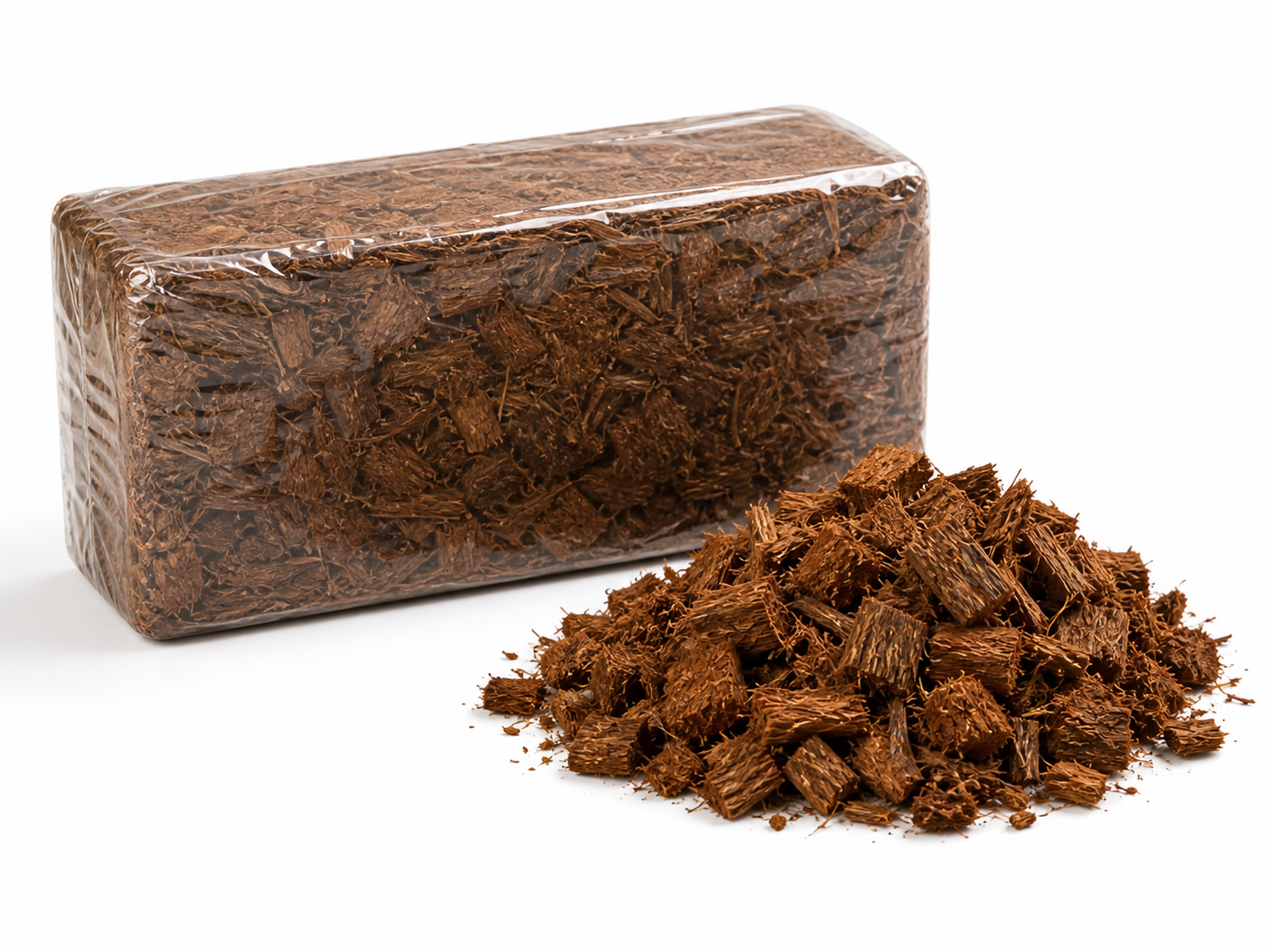
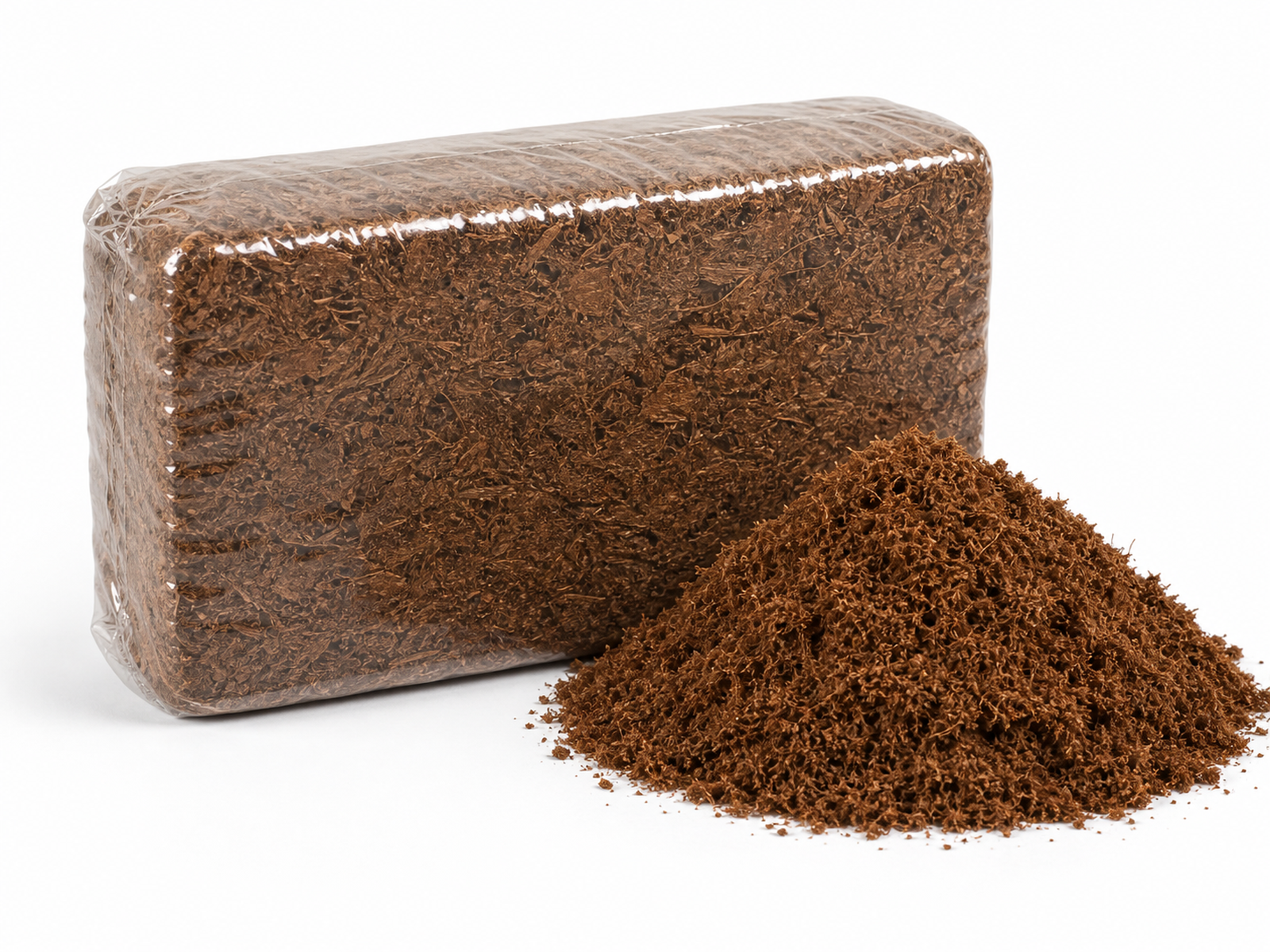
Short answer: For ball pythons and most snakes, coarse coco husk chips are an excellent substrate. They hold humidity well, allow burrowing, resist compaction under a heavier body, are easy to spot-clean, and carry a lower impaction risk than fine substrates.
What does a ball python need from its substrate?
Ball pythons are tropical, semi-fossorial snakes. The substrate has three main jobs:
- Hold humidity in the right range, especially important around shedding.
- Allow secure burrowing and hiding, which reduces stress.
- Stay airy and hygienic, so it does not turn into a damp, compacted mat.
Why coco husk chips work so well
Coarse coconut husk chips tick all three boxes. The chunky particle size keeps the bedding open and ventilated, so it holds moisture without going stagnant, and it springs back rather than compacting under a large snake. Because the pieces are big, they are far less likely to be ingested during feeding than fine fibre — a meaningful point for snakes that strike enthusiastically.
How much humidity, and how do I manage it?
Coco husk holds water and releases it gradually, which makes humidity easier to manage than with very dry beddings. To raise humidity, lightly dampen part of the substrate or mist; to lower it, increase ventilation. Always pair substrate humidity with a hygrometer and the correct temperature gradient rather than guessing.
Husk chips vs fine fibre for snakes
| Coco husk chips | Fine coco fibre | |
|---|---|---|
| Structure / airflow | High | Lower (can compact) |
| Burrowing for large snakes | Good | Good but packs down |
| Impaction risk if ingested | Lower (large pieces) | Higher (fine particles) |
| Humidity hold | Good, airy | High, denser |
For most snakes, chips are the safer default. Some keepers blend in a little fibre to fine-tune humidity — see our guide on fibre vs chips.
Key takeaways
- Coco husk chips suit ball pythons, boas and larger snakes: airy, burrowable, humidity-holding.
- Large pieces mean lower impaction risk than fine fibre.
- Manage humidity with a hygrometer; feed on a dish to keep risk low.