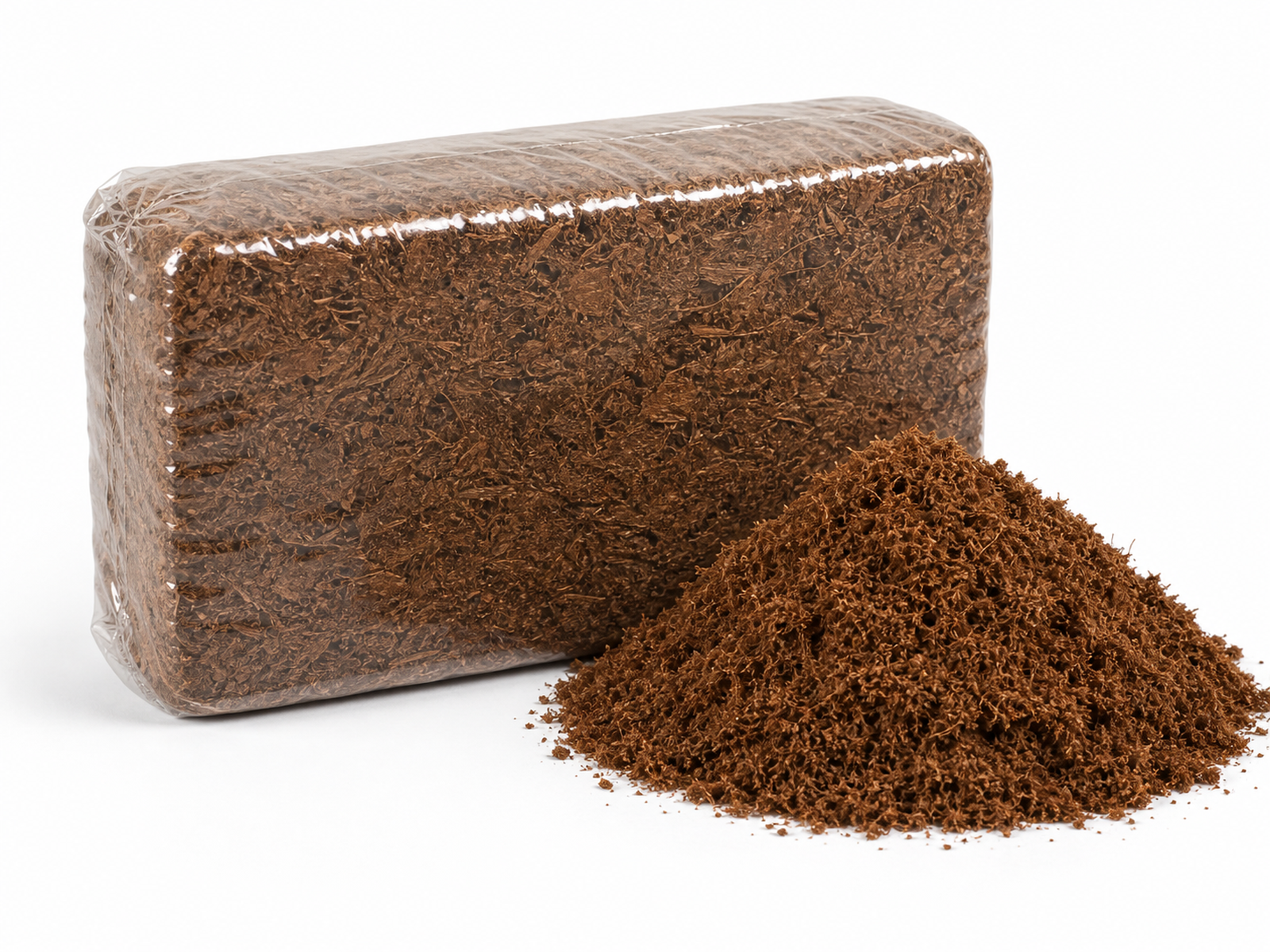
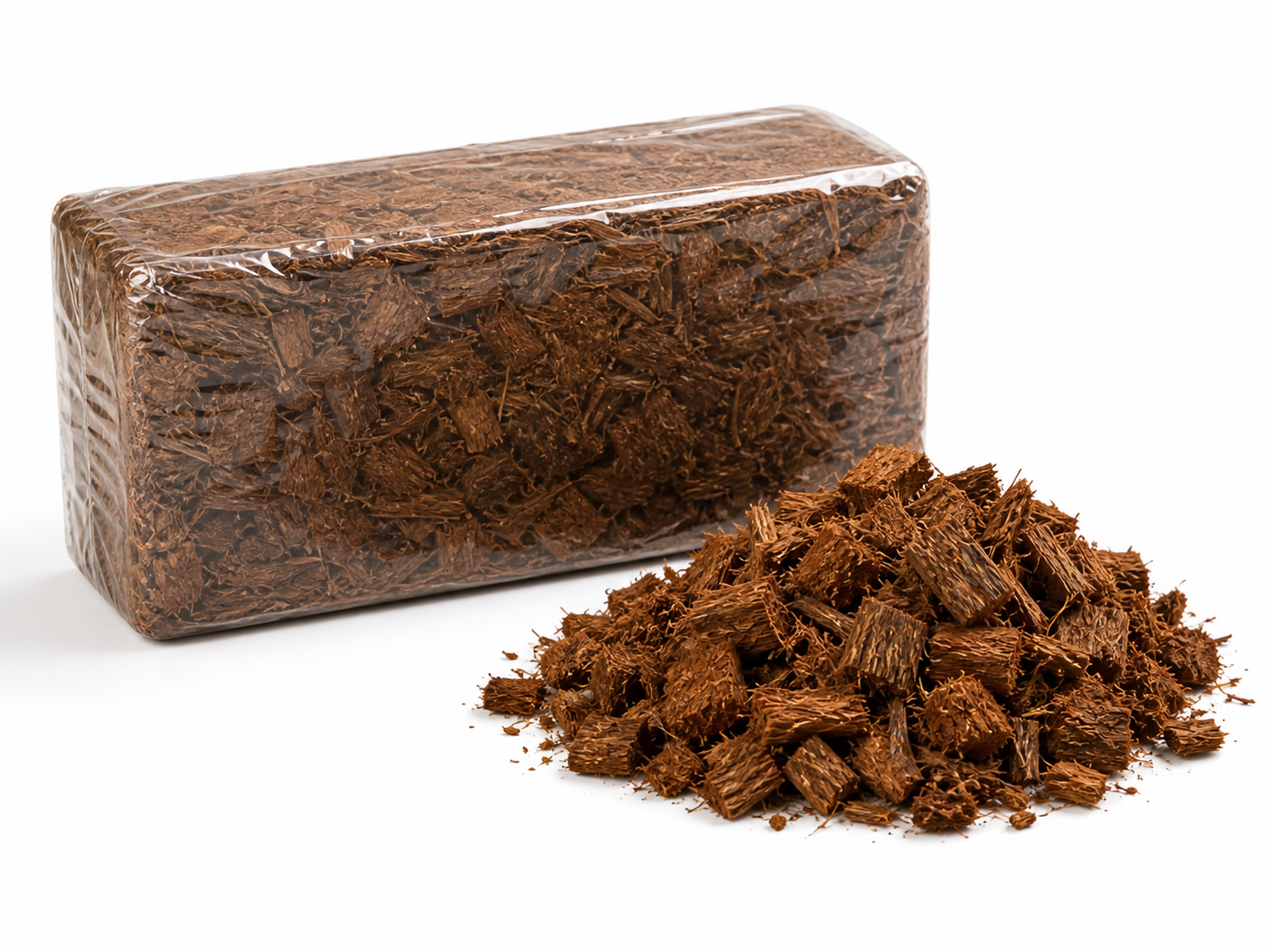
Short answer: Fine coco fibre holds moisture and humidity, which suits tropical lizards, geckos and amphibians. Coarse coco husk chips give structure, airflow and lower impaction risk, which suits snakes and larger reptiles. Many keepers blend the two to balance humidity and structure.
How they differ
| Property | Fine coco fibre | Coco husk chips |
|---|---|---|
| Particle size | Fine, soft | Coarse, chunky |
| Humidity hold | High, dense | Good, airy |
| Airflow / structure | Lower — can compact | High — stays open |
| Impaction risk if ingested | Higher (fine) | Lower (large pieces) |
| Best for | Geckos, chameleons, amphibians | Snakes, larger reptiles |
When to choose fine fibre
Reach for fine coco fibre when humidity is the priority and the animal is not a large, enthusiastic feeder: crested and day geckos, chameleons, and frogs and amphibians that need a consistently moist, soft bed.
When to choose husk chips
Reach for coco husk chips when structure, airflow and burrowing matter: ball pythons, boas and larger reptiles. The coarse size also keeps impaction risk lower.
Can I blend them?
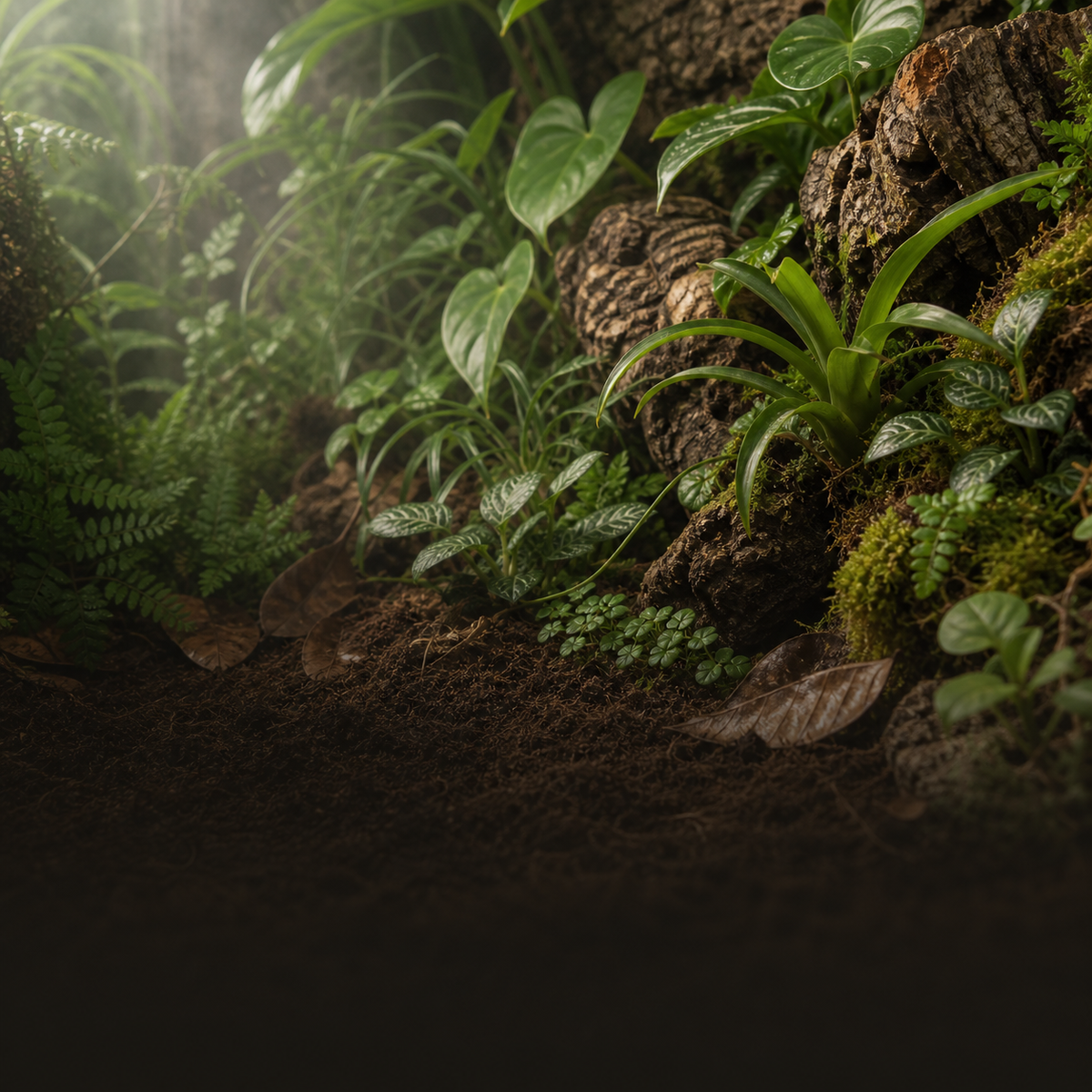
Yes — blending is common and effective. Adding chips to fibre opens up the mix and improves drainage and airflow; adding fibre to chips nudges humidity up. A bioactive base is essentially a tuned blend designed for planted vivariums. If you sell own-brand substrate, a considered fibre-to-chip ratio is an easy way to differentiate a product for a specific species.
Key takeaways
- Fibre = moisture and humidity; chips = structure, airflow and lower impaction risk.
- Match the grade to the animal — geckos/amphibians vs snakes/larger reptiles.
- Blends let you balance humidity and structure, and differentiate own-brand products.