Match the substrate to the animal.
Think in terms of the species your customers keep. Pick the animal, see the habitat it needs, and the products that fit — ready to stock under your own brand.
Which coco substrate for which reptile?
| Animal group | Examples | Recommended product | Why |
|---|---|---|---|
| Snakes & larger reptiles | Ball pythons, boas, large colubrids | Coconut Husk Chips | Structure, airflow, lower impaction risk |
| Tropical lizards & geckos | Crested & day geckos, chameleons | Coconut Fibre (brick or loose) | Holds moisture & humidity |
| Frogs & amphibians | Dart frogs, tree frogs | Coconut Fibre loose | Soft, moist, ready-to-use bed |
| Bioactive & planted | Planted vivariums, cleanup crews | Coconut Fibre + Husk Chips blend | Roots plants, feeds isopods & springtails |
| Dry / desert species | Bearded dragons, leopard geckos | Use with care — see below | Coir holds moisture; manage humidity & dust |
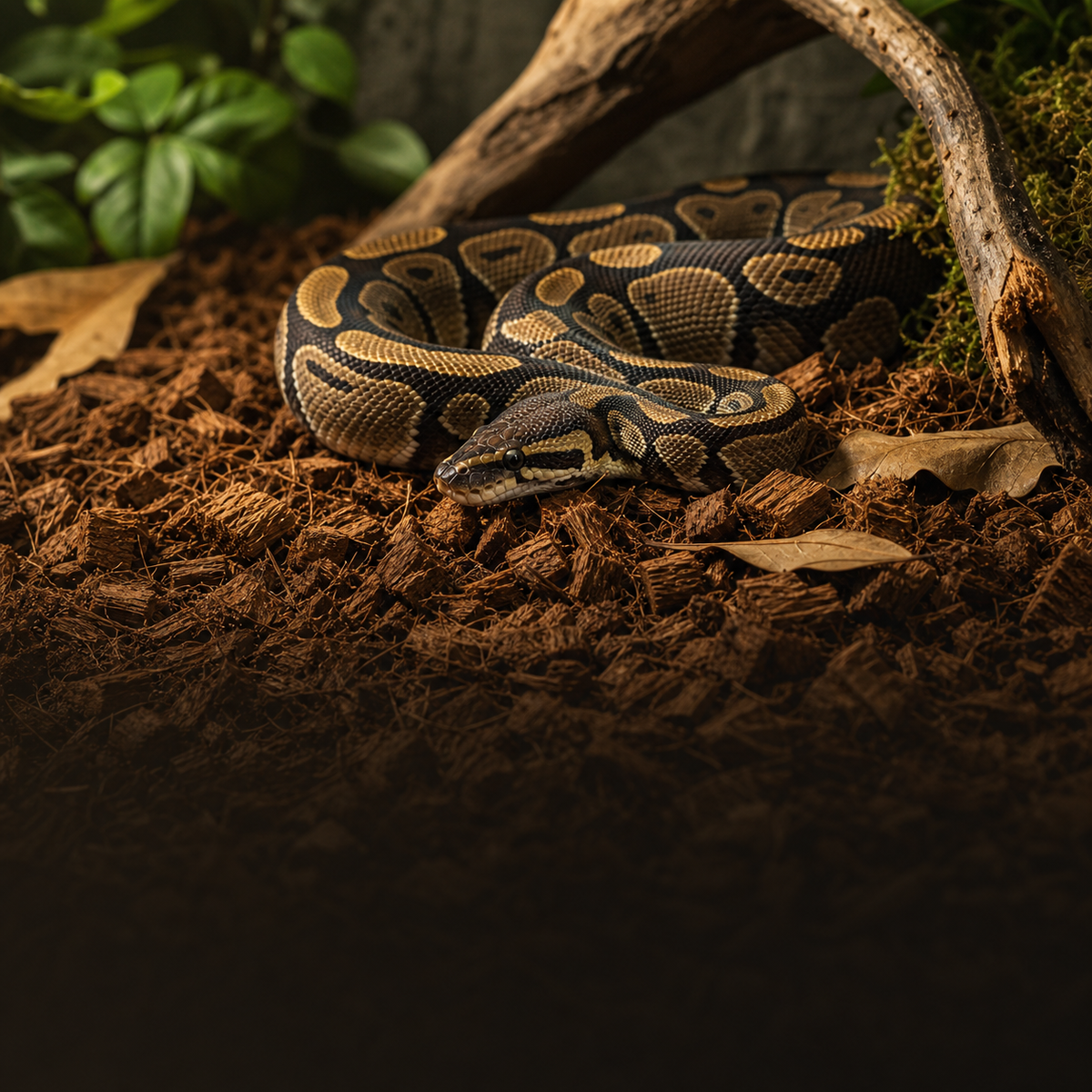
Which substrate is best for snakes?
For snakes such as ball pythons and boas, Coconut Husk Chips are the strongest fit: the coarse particle size keeps the enclosure airy, lets the animal burrow, holds humidity, and resists compaction under heavier bodies.
Holds structure under heavier animals.
Keeps the habitat open and breathable.
Coarse chips are less easily ingested than fine substrate.
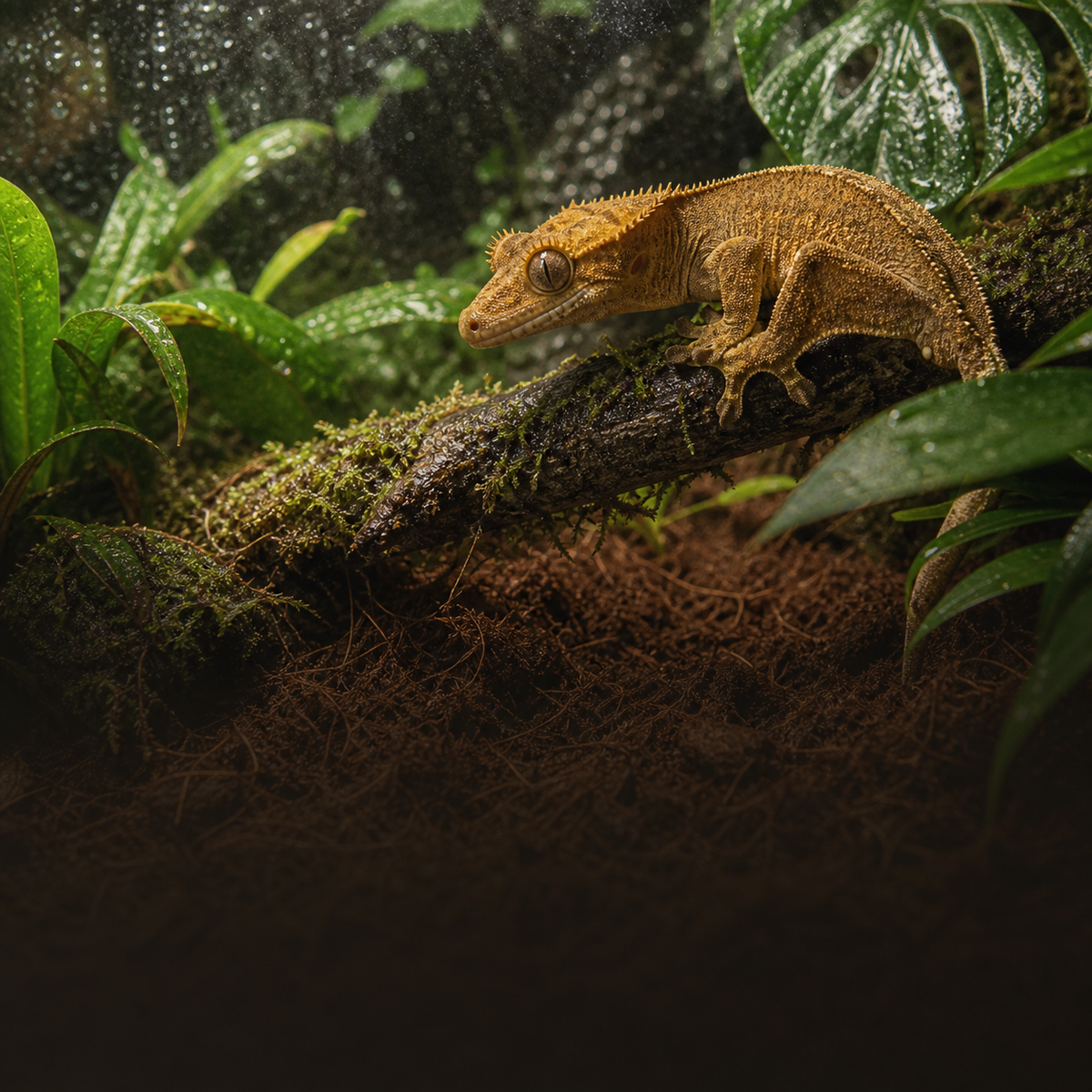
What substrate do crested geckos and chameleons need?
Tropical lizards — crested geckos, day geckos and chameleons — need a substrate that holds water and releases humidity steadily. Fine coco fibre does exactly that: choose compressed bricks for freight efficiency or loose bags for convenience.
Fine fibre holds and releases water steadily.
Compressed to ship, or ready-to-use from the bag.
A soft, planted-friendly tropical bed.
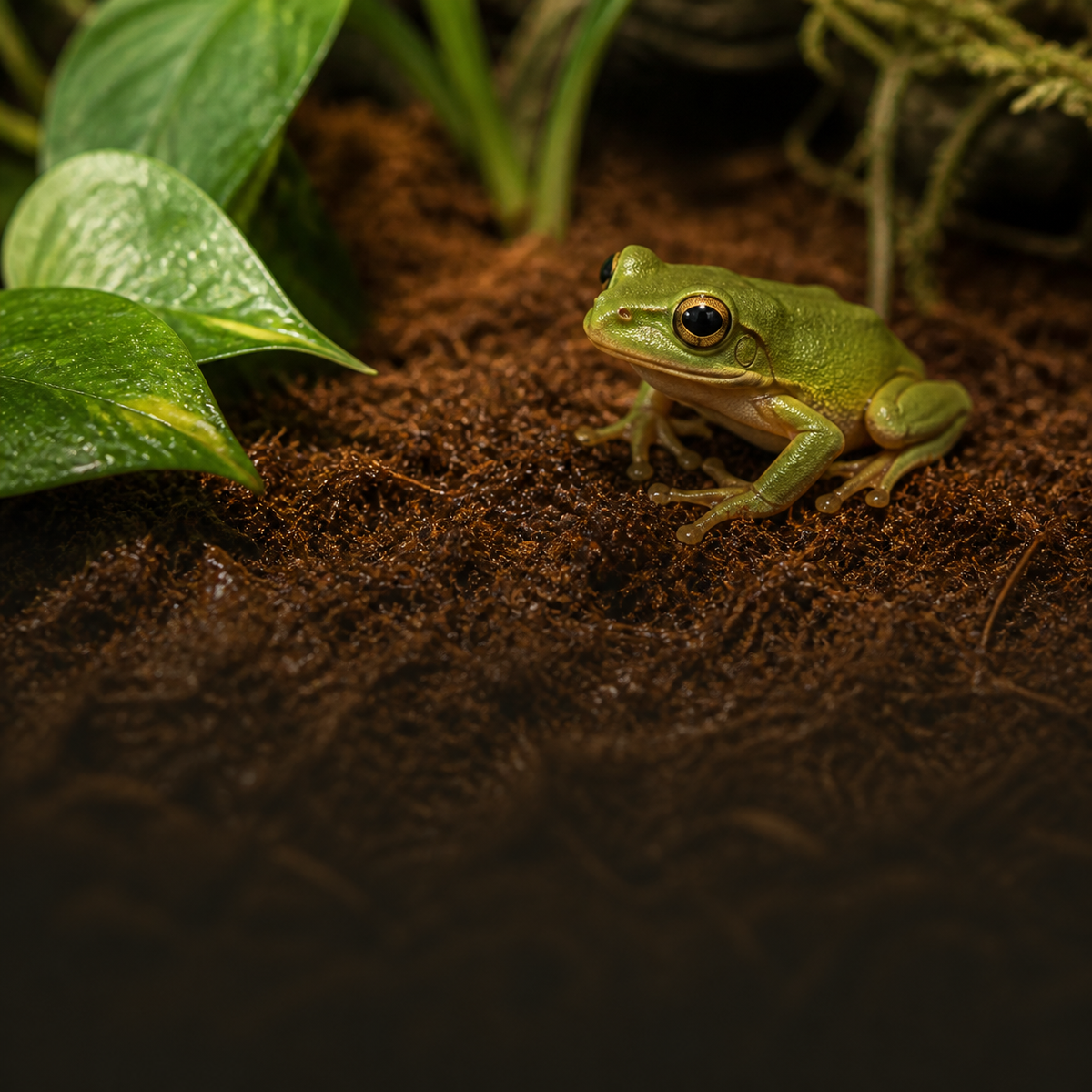
Which substrate is safe for frogs and amphibians?
Amphibians need a consistently moist, soft and clean substrate. Loose coco fibre gives a ready-to-use humid bed, and pairs naturally with a bioactive base for planted dart-frog and tree-frog vivariums.
Keeps humidity high for amphibian skin.
Loose fibre, straight from the bag.
Layer over a coconut fibre & husk chips blend for planted setups.
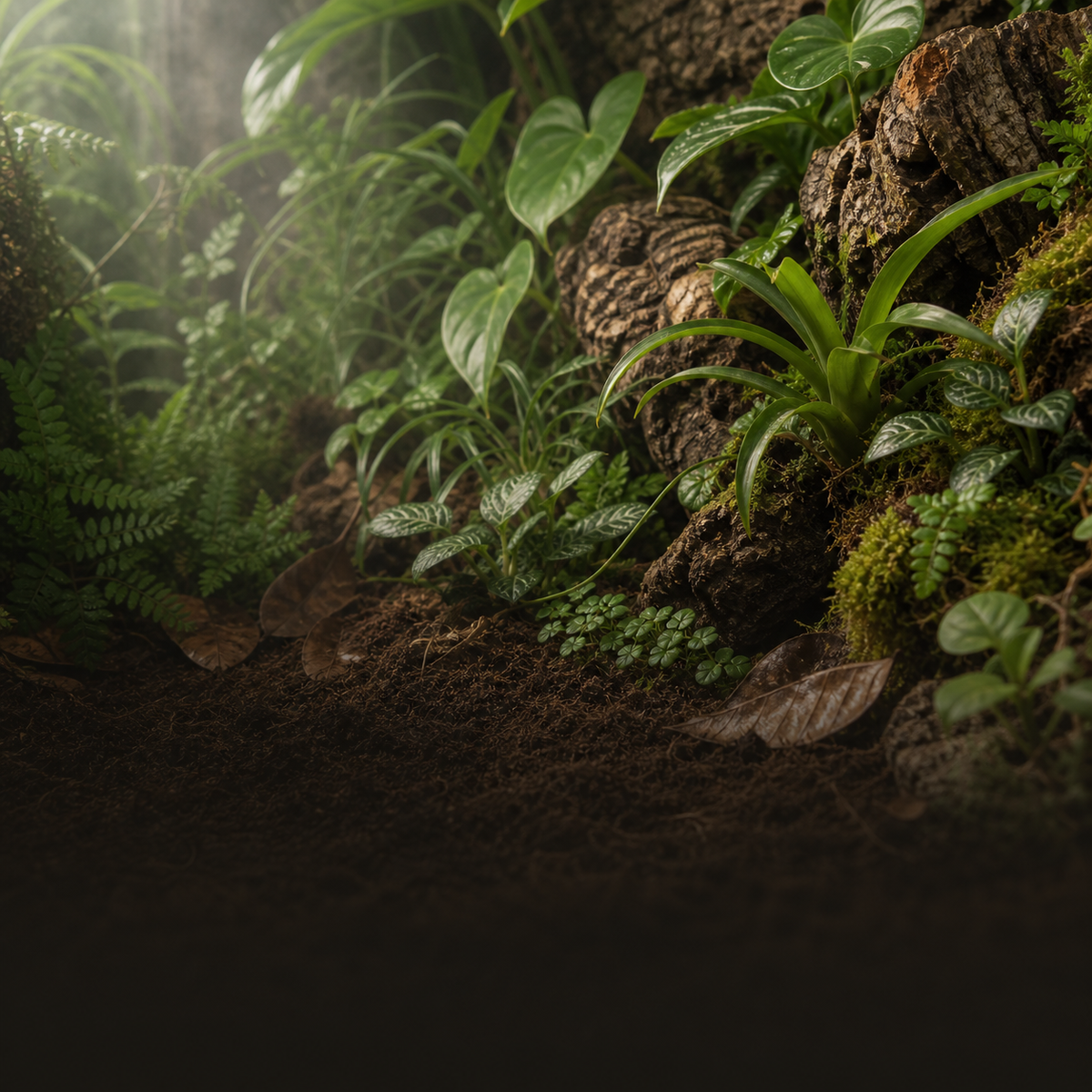
What is the best base for a bioactive vivarium?
Bioactive vivariums rely on a substrate that roots live plants, sustains microfauna and stays stable. A Coconut Fibre & Husk Chips blend is built for this — used as a base layer with a drainage layer and leaf litter, and often blended with husk chips to tune drainage.
A rooting medium for naturalistic planting.
A stable home for isopods and springtails.
Structured to last in a living vivarium.
Can you use coco substrate for dry or desert species?
Coir can be used dry for burrowing desert species, but it holds moisture by design, so it's not a set-and-forget arid substrate. For bearded dragons, leopard geckos and similar, keep it genuinely dry to prevent mould, watch the humidity gradient, choose a low-dust grade, and feed on a dish to limit ingestion — or blend with sand-based substrate rather than using coir alone. We'd rather tell you this up front than oversell coir into the wrong habitat.
Our responsible-claim approachNot sure which products to stock?
Tell us the species your brand serves and we'll recommend the right substrate mix — and send samples to test.