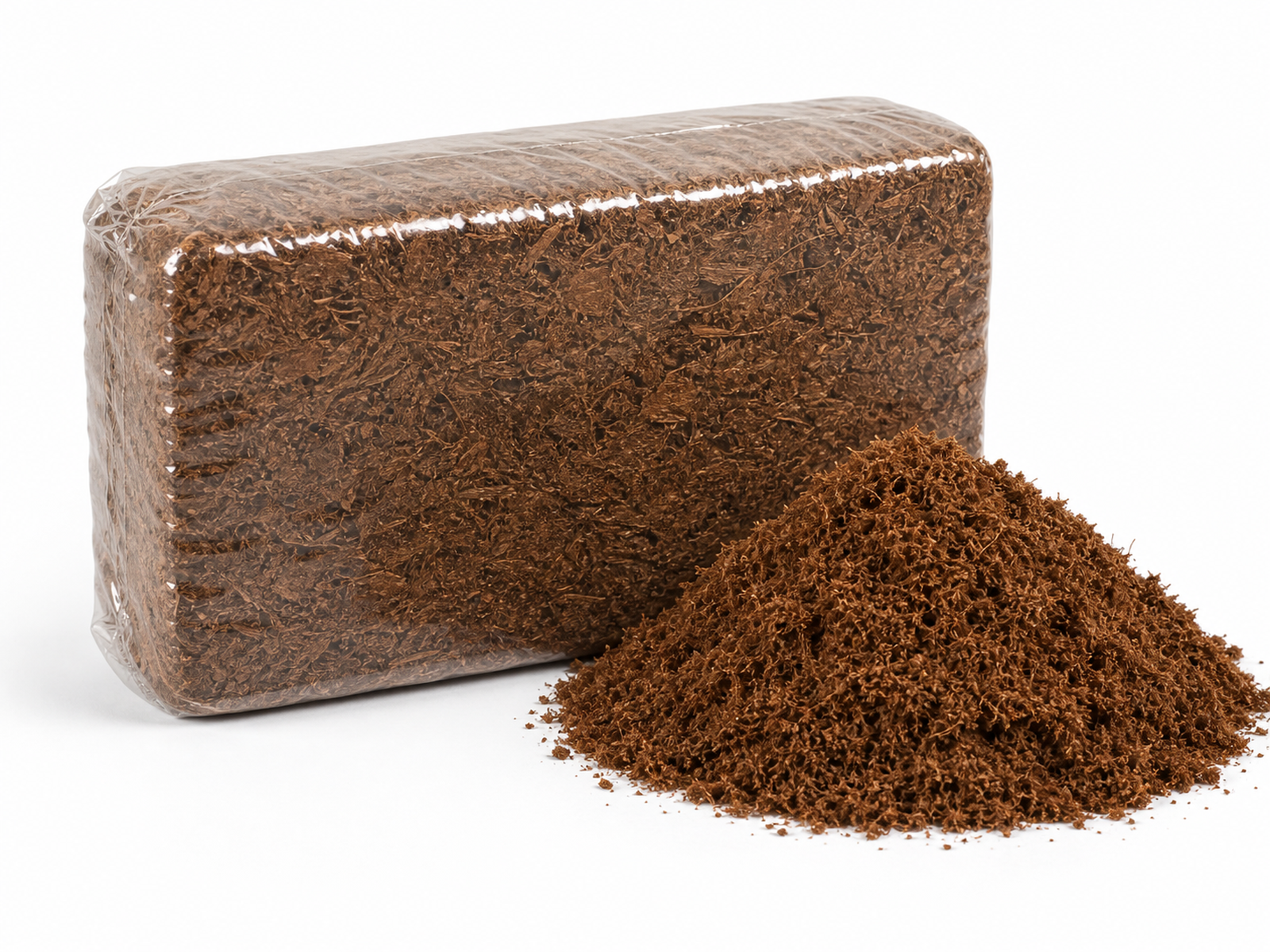
Short answer: For crested geckos and other tropical lizards, fine coco fibre is an ideal substrate: it holds water and releases humidity steadily, suits planted setups, and is soft and naturalistic. Choose compressed bricks for storage efficiency or loose bags for convenience.
Why humidity is the deciding factor
Tropical geckos and chameleons come from humid environments and rely on ambient moisture for hydration and healthy shedding. The substrate is a big lever on enclosure humidity: fine coco fibre absorbs water and gives it back to the air gradually, which helps hold humidity in range between mistings.
Brick or loose — which should I use?
- Compressed brick — expands when hydrated, stores compactly and ships efficiently. Best if you keep multiple enclosures or want to hold stock.
- Loose, ready-to-use — pre-hydrated and bagged, so you open and fill with no soaking step. Best for convenience.
The coir itself is the same; the difference is purely how it is supplied.
Setting it up well
- Lay a substrate depth that lets you keep the lower layer lightly moist without the surface being waterlogged.
- Mist as needed and confirm humidity with a hygrometer rather than relying on look alone.
- Spot-clean regularly; coir handles waste well but still needs maintenance.
- For a living setup, layer fine fibre over a bioactive coco base with live plants and a clean-up crew.
Is fine fibre safe for geckos?
Used sensibly, yes. As with any loose substrate, the main caution is ingestion during feeding — offer feeders in a dish or with feeding tongs so geckos are not grabbing substrate with their food. Choose a low-dust grade and keep the substrate clean.
Key takeaways
- Fine coco fibre holds and releases humidity — ideal for crested/day geckos and chameleons.
- Brick vs loose is a convenience choice; the coir is identical.
- Layer over a bioactive base for planted, naturalistic setups; feed in a dish to limit ingestion.