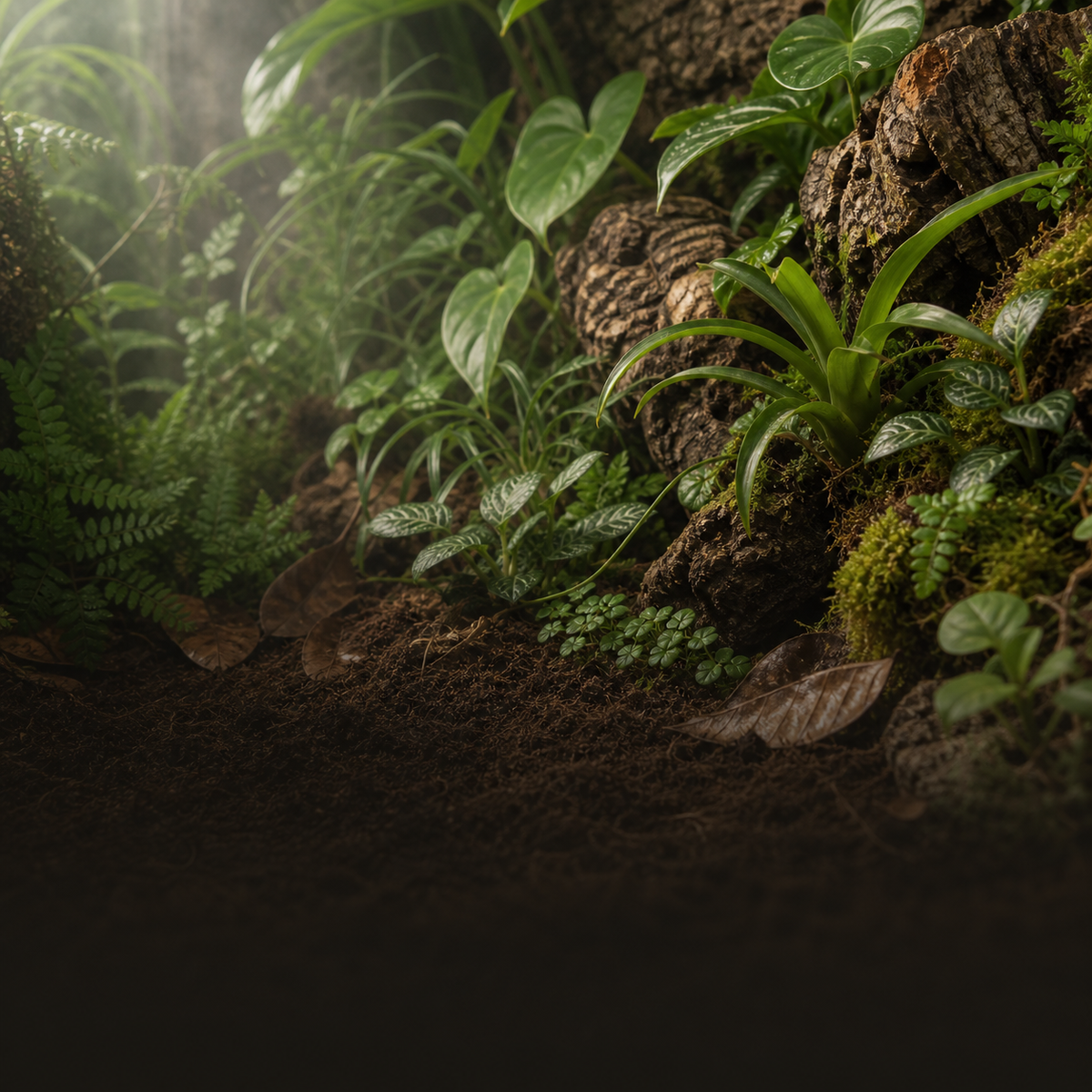
Short answer: A bioactive vivarium uses live plants and a clean-up crew (isopods and springtails) to break down waste naturally. The substrate is built in layers: a drainage layer, a coir-based bioactive base that roots plants and houses microfauna, and leaf litter on top.
What “bioactive” actually means
In a bioactive setup, a clean-up crew of small invertebrates — typically isopods and springtails — consumes animal waste, mould and decaying plant matter, while live plants take up the nutrients. Done well, it dramatically reduces spot-cleaning and creates a more naturalistic, stable habitat.
The substrate layers, top to bottom
- Leaf litter (top). Cover and food for the clean-up crew, and a naturalistic surface.
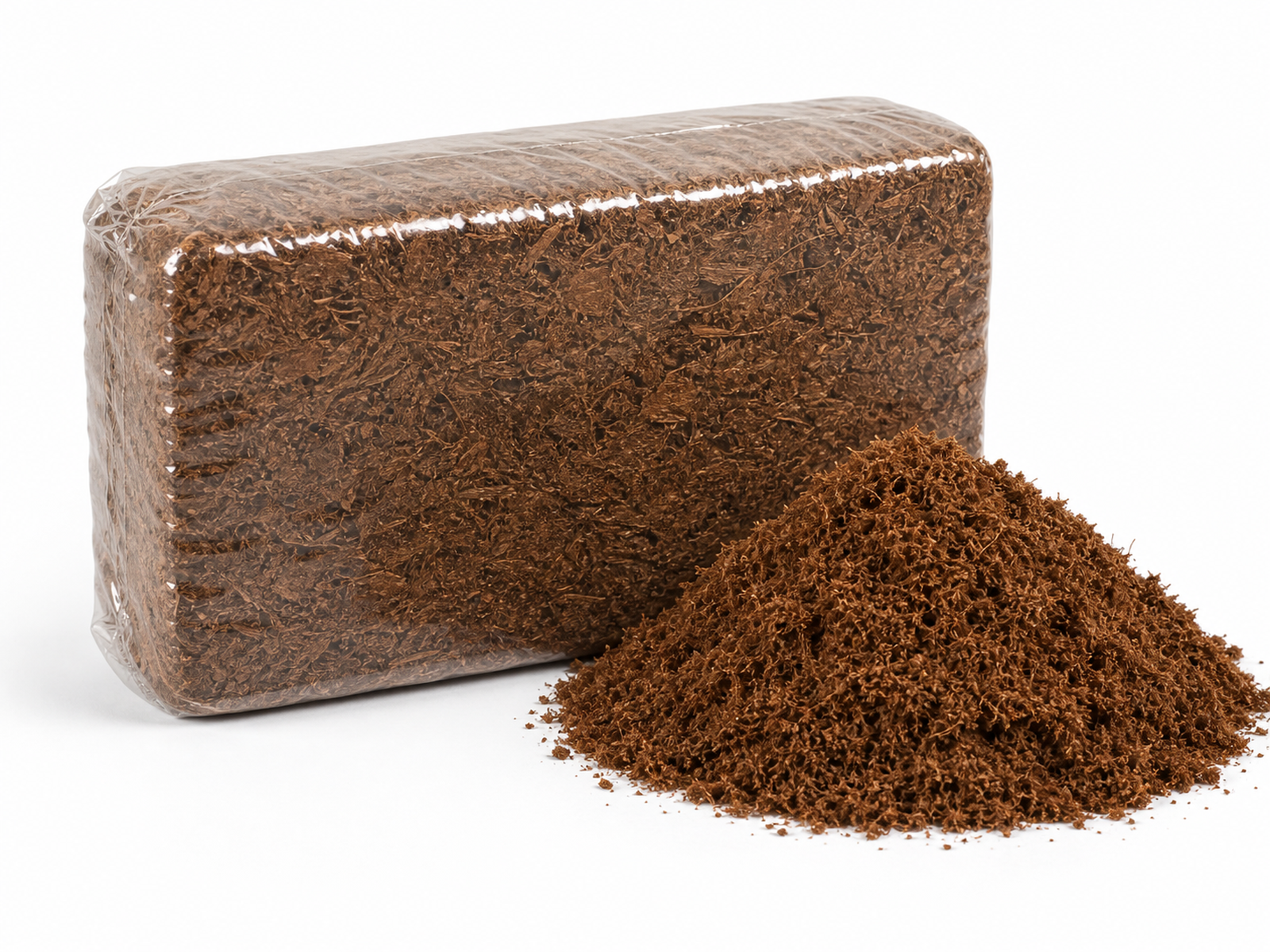
- Bioactive coco base (main layer). A coir-based blend that roots live plants, holds moisture and houses the microfauna. This is the heart of the system.
- Drainage layer (bottom). A layer (such as a lightweight aggregate) that lets excess water collect below the substrate so roots and microfauna are not waterlogged, often separated by a mesh.
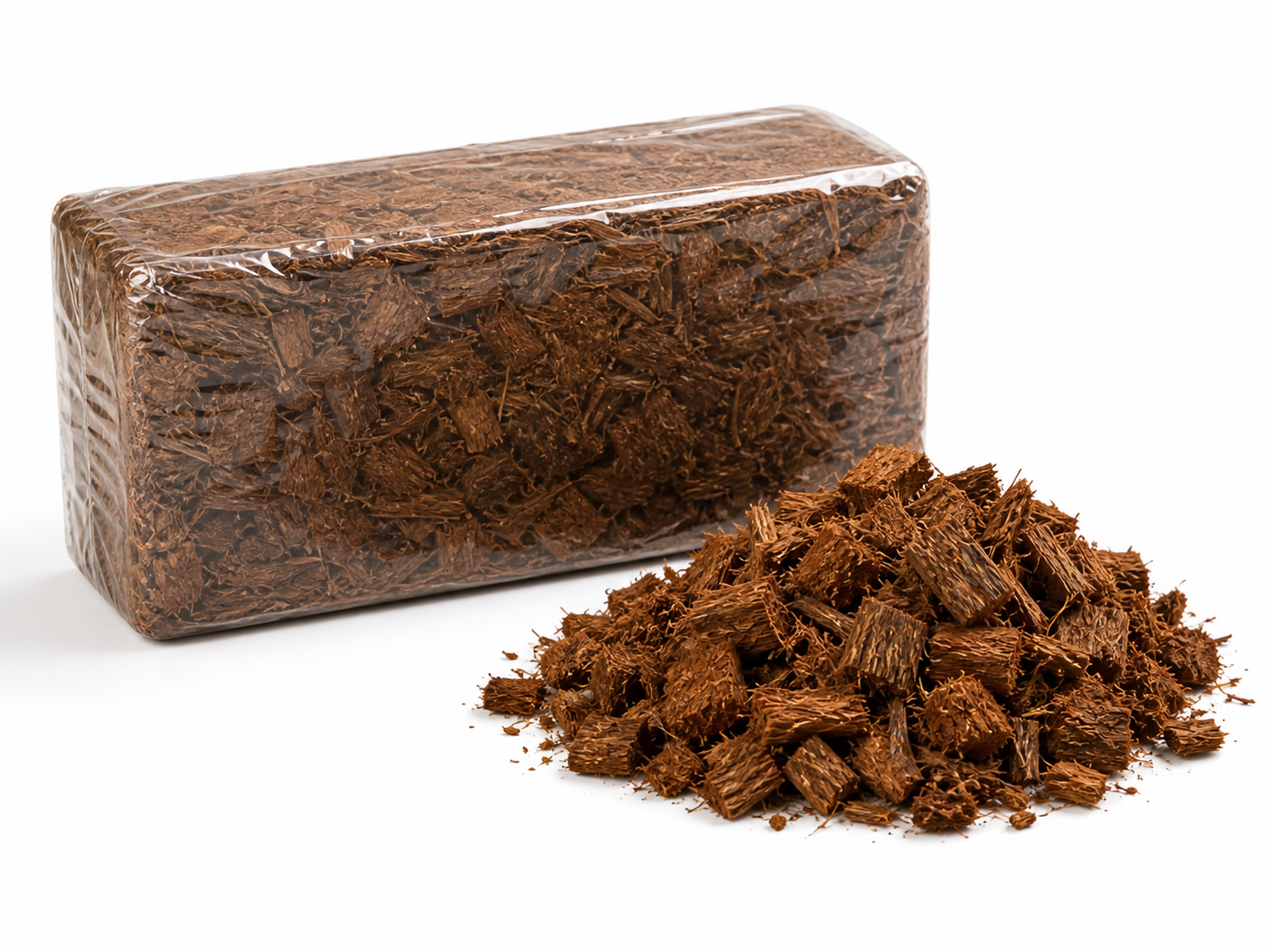
The a Coconut Fibre & Husk Chips blend is exactly that base layer — designed as a base, not a complete kit, so you pair it with drainage and leaf litter to build the full system.
Why coir makes a good bioactive base
- It roots live plants and holds moisture without going stagnant.
- It gives isopods and springtails a stable place to live and reproduce.
- A tuned fibre-to-chip ratio keeps it from compacting over time.
- For planted setups, calcium/magnesium buffering (available on request) supports healthier plant growth.
Getting started
Match the build to the animal: humidity-loving species (dart frogs, crested geckos) suit bioactive setups well, while very dry species generally do not. Establish plants and the clean-up crew before — or alongside — the animal so the system has time to settle. Then let the ecosystem do most of the maintenance for you.
Key takeaways
- Bioactive = live plants + clean-up crew breaking down waste naturally.
- Layers: drainage at the bottom, coir-based base in the middle, leaf litter on top.
- A coir bioactive base roots plants and houses microfauna; pair it with drainage and litter.