Short answer: Yes — coco coir is safe for most tropical and humidity-loving reptiles and amphibians when it is washed to lower its salt content, screened to reduce dust, free of chemical treatment, and used with sensible feeding practice. The risks people worry about are real but manageable.
What makes a coco substrate “animal-safe”?
Plant-grade and animal-grade coir are not automatically the same thing. For reptile use, four processing factors do most of the work:
- Low salt (EC). Raw coir can carry sodium and potassium salts from where it was processed. Washing and desalination bring the salt content (measured as EC) down to levels appropriate for animal habitats.
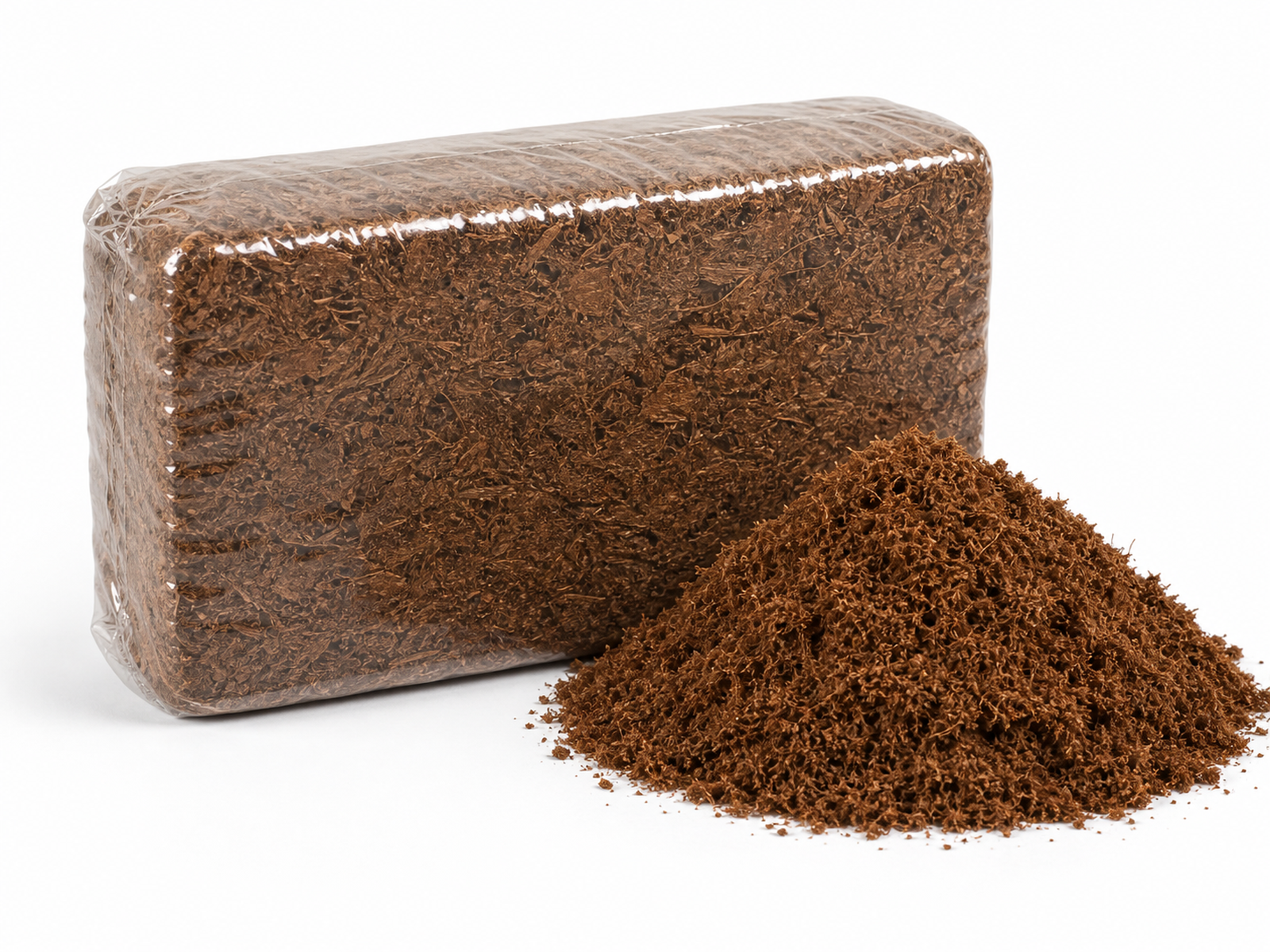
- Low dust. Fine airborne dust can irritate the respiratory system of small animals. Good coir is sieved and graded to keep dust down.
- No chemical treatment. No added pesticides, fertilisers or chemical binders — the substrate should be just coconut.
- Pest- and pathogen-conscious handling. Coir is processed and handled to minimise the chance of importing pests or contaminants.
This is why a credible supplier can provide documented EC, pH, dust and moisture figures on request. If a substrate has no specifications behind it, you are buying on trust alone.
Does coco coir cause impaction?
Impaction — a blockage caused by ingested substrate — is the concern keepers raise most often, and it is worth taking seriously. Any loose substrate can be swallowed, usually when an animal grabs a mouthful while striking at food. The practical ways to keep the risk low:
- Feed on a dish, tile or feeding station rather than directly off the substrate.
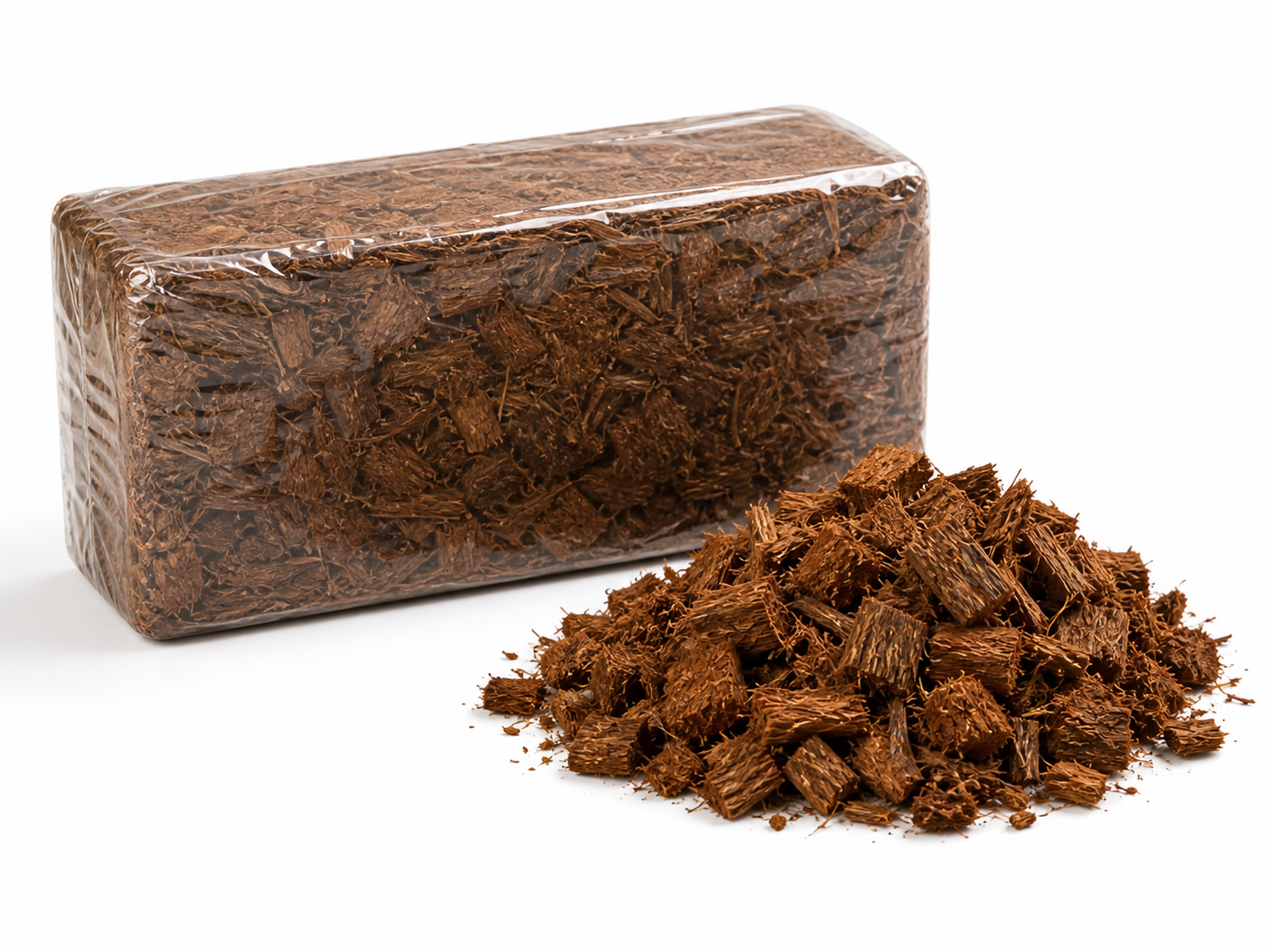
- Choose coarser coco husk chips for larger animals — big pieces are far less likely to be ingested than fine fibre.
- Keep animals well-hydrated and at correct temperatures, which supports healthy digestion.
- Supervise feeding, especially with smaller or enthusiastic feeders.
Which animals is coco coir suitable for?
Coco coir excels with tropical and humidity-dependent species, and is used as a base for planted, bioactive setups. It is generally a good fit for:
- Tropical geckos (crested, day), chameleons and similar humidity-loving lizards.
- Snakes such as ball/royal pythons and boas (typically the chunkier husk chips).
- Frogs and amphibians that need a consistently moist bed.
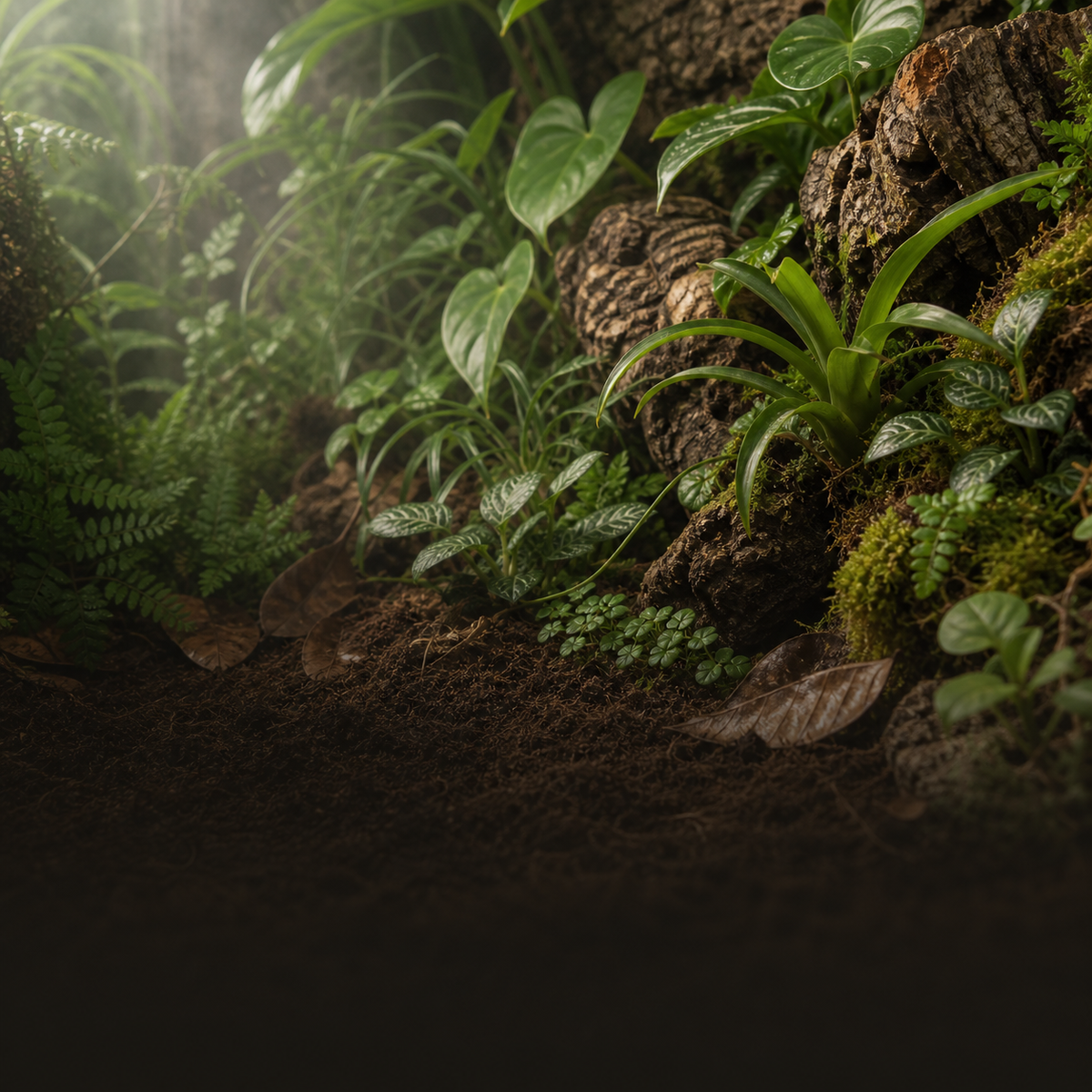
- Bioactive and planted vivariums, as a rooting and clean-up-crew layer.
When is coco coir not the right choice?
Coir holds moisture by design, so it is not a set-and-forget substrate for dry, arid species like bearded dragons or leopard geckos. It can be used dry for burrowing desert species, but only with care: keep it genuinely dry to prevent mould, manage the humidity gradient, use a low-dust grade, and consider blending with a sand-based substrate rather than relying on coir alone. A good supplier will tell you this rather than sell coir into the wrong habitat.
Key takeaways
- Animal-safe coir is washed (low salt), low-dust, chemical-free and documented.
- Impaction risk is real but manageable: feed on a dish and pick coarse chips for larger animals.
- Ideal for tropical species, snakes and bioactive setups; use with care for arid species.